
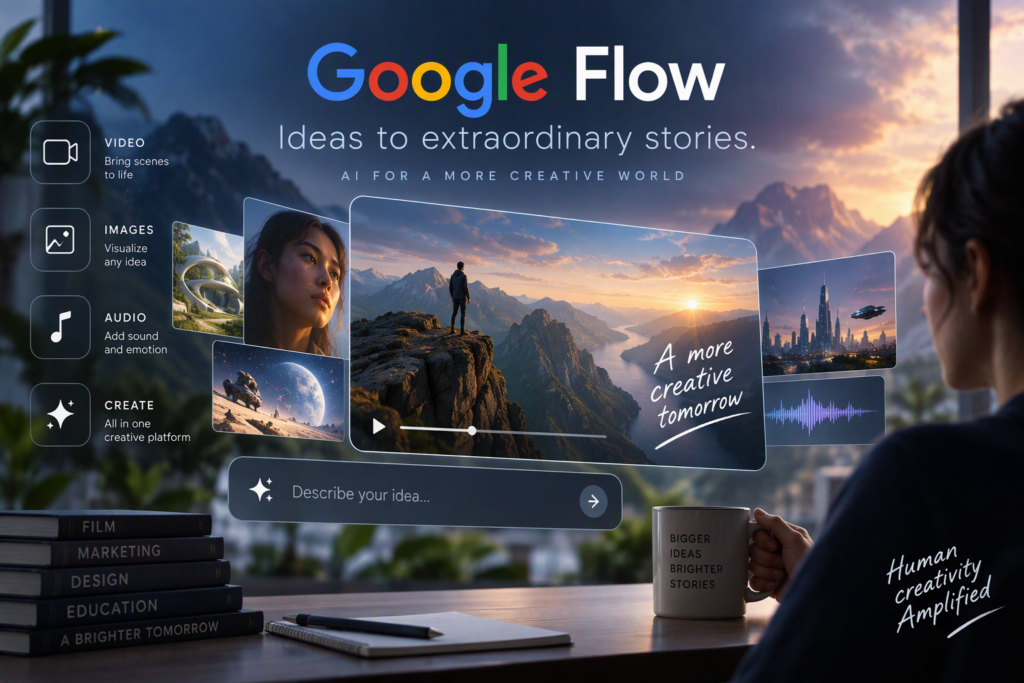
Google Flow: How Google's AI Creative Platform Is Changing Digital Storytelling
Artificial intelligence is rapidly transforming creative work, and Google Flow is one of the most ambitious tools to emerge from this shift. Designed for filmmakers, marketers, content creators, designers, and storytellers, Google Flow combines advanced AI models into a single platform that can generate videos, images, audio, and creative assets from natural language prompts.
What Is Google Flow?
Google Flow is an AI-powered creative platform developed by Google that allows users to create cinematic content using simple text instructions. Rather than relying on traditional editing software that requires extensive technical skills, creators can describe a scene, character, or concept, and Flow generates visual content automatically.
The platform combines several of Google’s leading AI technologies:
- Veo for AI video generation
- Imagen for AI image generation
- Additional AI tools for audio, dialogue, and creative workflows
The result is a unified environment where creators can move from an idea to a polished visual story much faster than with traditional production methods.
Built for Modern Creatives
Google describes Flow as being “built with and for creatives.” The platform is aimed at users who want professional-looking results without needing large production teams, expensive equipment, or advanced editing expertise.
Potential users include:
- Filmmakers creating storyboards or short films
- Marketing teams developing promotional videos
- Social media creators producing content at scale
- Designers exploring visual concepts
- Educators creating engaging learning materials
- Businesses developing training or communication content
This broad appeal reflects a growing trend where AI becomes a creative partner rather than simply a productivity tool.
Key Features
1. Text-to-Video Generation
One of Flow’s standout features is its ability to generate video clips from written prompts. A creator might enter:
“A drone shot flying over a rugged coastline at sunset with waves crashing against the cliffs.”
Flow can then generate a video sequence that matches the description. The technology behind this capability is Google’s Veo model.
2. AI Image Creation
Using Google’s Imagen technology, users can create high-quality still images from text prompts. These images can be used independently or incorporated into larger video projects.
This is particularly useful for:
- Concept art
- Marketing visuals
- Product mockups
- Story development
- Creative experimentation
3. Audio and Dialogue Generation
Newer versions of Flow extend beyond visuals by supporting synchronized audio generation. Creators can produce:
- Environmental sounds
- Music
- Dialogue
- Ambient effects
This helps turn silent AI-generated clips into more immersive cinematic experiences.
4. Consistent Storytelling
A common challenge in AI-generated content is maintaining consistency between scenes. Flow focuses on allowing users to create clips, scenes, and stories with greater continuity, helping characters and visual styles remain aligned throughout a project.
Why Google Flow Matters
The significance of Google Flow extends beyond its technical capabilities.
Traditionally, creating a professional-quality video required:
- Cameras
- Lighting
- Locations
- Actors
- Editing software
- Production budgets
Flow reduces many of these barriers by allowing creators to produce sophisticated visuals through AI-assisted workflows. This democratizes content creation and enables individuals and small businesses to compete with larger organizations.
For marketers, it means faster campaign development. For filmmakers, it can accelerate pre-production. For educators, it can make content creation more accessible.
Flow TV: Learning from the Community
Google also introduced Flow TV, a platform where users can explore AI-generated content created with Flow and review the prompts behind it.
This provides:
- Inspiration for new projects
- Prompt-writing examples
- Insight into creative workflows
- Opportunities to learn from other creators
As AI creativity often depends on prompt quality, Flow TV can become a valuable educational resource.
The Future of Creative Production
Google Flow represents a broader shift towards AI-assisted media production. While it is unlikely to replace human creativity, it significantly changes how creative professionals work.
The most successful users will likely be those who combine:
- Human storytelling
- Creative direction
- Brand understanding
- AI generation capabilities
In this model, AI handles much of the execution while humans focus on ideas, strategy, and artistic judgment.
Final Thoughts
Google Flow is more than just another AI tool. It is a comprehensive creative platform that brings together video generation, image creation, audio production, and storytelling workflows in a single environment. By lowering technical barriers and accelerating production, it has the potential to reshape how content is created across entertainment, marketing, education, and business.
As AI-generated media continues to improve, platforms like Google Flow are likely to become an essential part of the modern creator’s toolkit, helping transform ideas into visual experiences faster than ever before.
